Displayed score, simple average and Google rating are separated, to find support that the headline number hides.
06
SPECIAL WEB FEATURE / 6 STORIES
Rethinking Tokyo's
hamburg steaks, plate by plate.
From popular vote to culinary evaluation. Public data,
first-hand tasting, and a judges' panel map where Tokyo's hamburg steak stands today.
Tokyo Hamburg Grand Prix 2026Read all six stories →
How much of a hamburg steak
can a score really capture?
Through 2025 this competition ran on open web voting. For 2026 it moves to a vote by anonymous judges appointed by the Japan Yoshoku Association — professionals from cooking, meat, yoshoku, food manufacturing and distribution. Public ratings for each candidate are examined, then layered with first-hand tasting and specialist judgement.
Tabelog's displayed score. Tabelog's simple average of user ratings. Google ratings. Last year's vote. Meat, doneness, sauce, rice, garnish, cleanliness, and whether a restaurant can keep going.
No single number is treated as the answer, and no number is ignored. Contemporary specialists and long-established yoshoku restaurants are neither flattened together nor kept apart — both are read as Tokyo hamburg steak.
Not only meat and doneness, but rice, sauce, service, the booking process and the room itself.
Related restaurants are ineligible. Rare-centre hamburg steak is excluded. The awards are limited to three, so that each one means something.
FOR READERS OUTSIDE JAPAN
What is yoshoku?
Yoshoku is not simply Western food served in Japan. It is food of foreign origin that Japan took apart and rebuilt for its own table.
THE ASSOCIATION’S DEFINITION
Yoshoku is Western cuisine that evolved in its own distinctly Japanese direction, to be eaten with rice.Japan Yoshoku Association
That last clause carries the weight. Rice is not a side dish here; it is the condition the cooking was designed around. The food historian Tetsu Okada proposed a simple line: what goes with bread is Western cooking, what goes with rice is yoshoku.
When Western dishes arrived in Japan, they were not preserved as imports. They were re-engineered around Japanese ingredients, Japanese palates, and above all around rice. Seasoning was rebalanced, portions were reshaped, and dishes were rebuilt to be eaten with a bowl of white rice rather than bread.
What emerged is a cuisine of its own. Curry rice, omurice, croquettes, gratin, and hambāgu are not foreign food in Japan — they are Japanese food, cooked at home, served in town restaurants, and refined in long-established restaurants and hotels.
Travellers often picture Japanese people eating sushi and tempura every day. They do not. A week of ordinary meals in Japan might run through Japanese, Chinese, Italian, curry and yoshoku without anyone finding it remarkable — a range of daily eating that is unusual almost anywhere else.
Nor is sushi one thing. A conveyor-belt plate, a supermarket pack and a counter in Ginza all go by that name and are effectively different dishes. Tempura runs from a topping at a standing soba counter to a specialist’s tasting menu. Even steak follows the pattern: served with fries in one room, with a bowl of white rice in another.
Yoshoku is also unusually free in form. It works with rice or with bread, with sake or with wine or beer. It crosses from home cooking to the neighbourhood diner to the hotel dining room, and it can be eaten with chopsticks or with a knife and fork. That looseness is not vagueness — it is what allows yoshoku to keep adapting.
Yoshoku is no different. The same name appears at a family table, at a hotel dining room and at a restaurant with a century of history — and none of those is a lesser version of another. What holds the category together is not a tier but a method.
Yoshoku may have foreign roots, but it has become Japanese food.
BEFORE YOU ORDER
The dishes you
think you know.
Ramen and sushi announce themselves as Japanese, so travellers seek them out. Yoshoku does not — and that is exactly why it gets skipped.
You scan a menu, read croquette, gratin, beef stew, hamburger steak, assume you already know what will arrive, and order something else. It is an understandable mistake, and it is the one worth avoiding.
These are not Japanese versions of European dishes. They are Japanese dishes that kept European names. A century of cooking for Japanese tables changed the ingredients, the seasoning, the texture and the way a plate is built — while the name stayed put.
Two dishes settle the argument, and they came out of the same kitchen. Doria sounds Italian; it was improvised in 1927 at the Hotel New Grand in Yokohama by the Swiss chef Saly Weil, for a guest who was unwell and asked for something easy to swallow. It exists in neither Italy, nor France, nor Weil’s native Switzerland.
Napolitan is named after Naples and is not Italian either. After the war, Weil’s student Shigetada Irie — by then the hotel’s second head chef — watched the occupying American officers eating boiled spaghetti with ketchup poured over it. He decided the idea was worth keeping and the execution was not, and rebuilt it around a proper tomato sauce. One hotel, one lineage of chefs, two Italian-sounding dishes that Italy has never served.
Those two also mark the two eras of yoshoku. Before the war the source was European — French technique above all, arriving through hotel kitchens and the ports. After 1945 a second stream came in, this time American, carried by the occupation: ketchup, spaghetti, fried chicken in a basket.
Restaurants did not hide the borrowing; they put it on the door. Center Grill, which opened in Yokohama’s Noge district in 1946 and made the ketchup version of napolitan famous, still trades under a single sign reading American-style · Center Grill · yoshoku. The old shopfront of Ginza Candle read American-style cooking. The foreign source was declared out front — and then the food was taken apart and rebuilt, exactly as the previous generation had rebuilt French cooking.
Yoshoku is roughly 150 years old. That is long enough to have its own classics, its own lineages of chefs, and its own century-old restaurants — the same depth people travel to Japan for elsewhere.
And you may have eaten yoshoku already without knowing it. Tonkatsu and Japanese curry travel well enough that both have made the list on their own — yet both are yoshoku, adapted from a European cutlet and a British-Indian stew. If those two convinced you, the rest of the category is waiting.
Tonkatsu とんかつ
A breaded pork cutlet, deep-fried and sliced. Descended from the French côtelette and rebuilt for chopsticks, rice and shredded cabbage.
Curry rice カレーライス
Arrived via Britain, not India. Thicker, milder and sweeter, built to be eaten with a spoon over Japanese rice.
Hambāgu ハンバーグ
A ground-meat steak with no bun and no relation to fast food. The blend, the grind and the sauce are designed restaurant by restaurant.
Omurice オムライス
Ketchup-seasoned rice wrapped in a thin omelette, often finished with demi-glace. Not an omelette with a filling.
Chicken rice チキンライス
Rice fried with ketchup and chicken, sometimes finished with demi-glace instead. Not the Hainanese chicken rice of Singapore, despite the shared English name. This is what fills an omurice.
Korokke コロッケ
Mashed potato rather than béchamel — crisp outside, soft and faintly sweet inside. Found both at butcher shops and on restaurant plates.
Menchi-katsu メンチカツ
Ground meat, breaded and deep-fried. Closer to a hambāgu in a crust than to a cutlet.
Napolitan ナポリタン
Spaghetti with peppers, onion and sausage, finished in a pan. Center Grill’s ketchup version is the one most people know; the Hotel New Grand original is built on a proper tomato sauce. Named after Naples, unknown in Naples.
Doria ドリア
Buttered rice under cream sauce and cheese, baked until browned. Born in Yokohama, and found nowhere in Europe.
Gratin グラタン
Macaroni in white sauce, browned in the oven. Doria is its rice counterpart; gratin is eaten as it comes, or with bread.
Beef stew & Hayashi rice ビーフシチュー・ハヤシライス
Demi-glace simmered for days, then served over or beside rice. The sauce is the restaurant’s signature.
Chicken basket チキンバスケット
Fried chicken with fries, served in a basket. Postwar American-style yoshoku, and still on the menu at older restaurants and coffee shops.
Add yoshoku to the list. A korokke handed over a butcher’s counter and a hambāgu on a white tablecloth in Ginza are the same cuisine — and that span, from the street to a hotel dining room serving since the 1920s, is what there is to go and find.
THE DISH
What is hambāgu?
Hambāgu is yoshoku — Japan’s distinctive take on hamburger steak, and the clearest example of how that adaptation works. It is not a hamburger patty without a bun.
There is no fixed recipe. The meat itself is a decision: kuroge wagyu blended with pork, domestic beef, US beef, Australian beef. Every restaurant chooses its own blend, and the choice changes everything downstream.
So does the rest of the build — breadcrumbs, onion, egg, dairy, spices, how coarsely the meat is ground, how far it is worked, how it is cooked, and what sauce completes it. A demi-glace that has been simmered for days and a grated daikon with soy sauce are not two versions of the same dish; they are two different designs.
Hambāgu developed to be eaten with rice, and that shaped its seasoning and its sauces. But it sits just as easily with bread, and with wine, beer or sake. You will find it on a white tablecloth in a long-established yoshoku restaurant, on a cast-iron plate at a town restaurant, and on the family table at home.
That range is the point. Judging hambāgu means asking what a given kitchen is designing for, not measuring every plate against a single ideal.
FROM THE KITCHEN
In Japan, the beef and pork available carry very little of the off-aroma that heavier seasoning is meant to cover. That is why a hambāgu can be finished with nothing more than grated daikon and soy sauce and still hold together as a dish.
Cooking hambāgu in Singapore and the Philippines with local meat made the point in reverse. Nutmeg, which had always seemed optional in Tokyo, suddenly had an obvious job to do: with that meat, its aroma had to be controlled before anything else could work.
There is no single formula for hambāgu. The meat determines the seasoning, the blend, the texture, the sauce — and even whether a spice is needed at all.
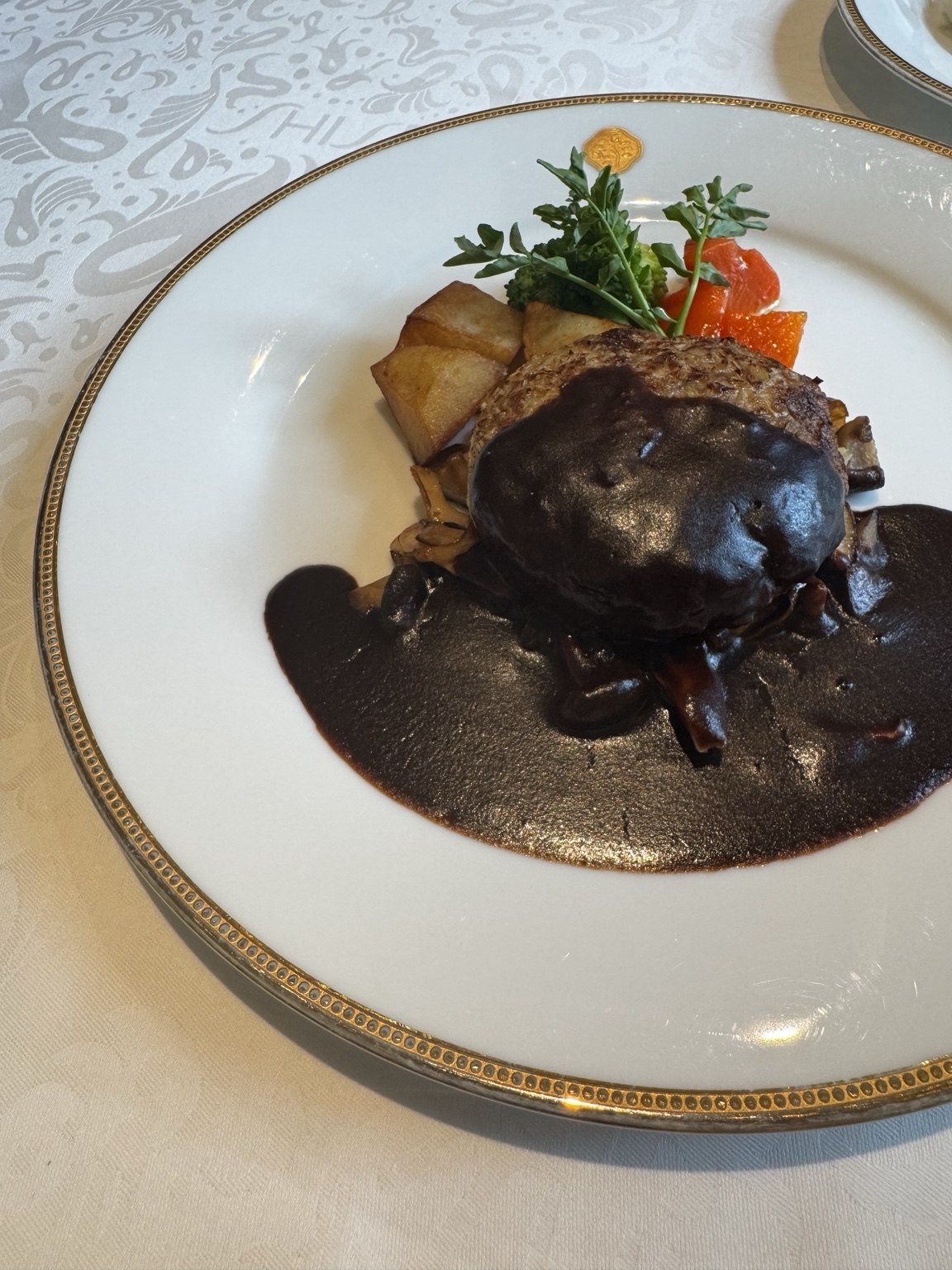
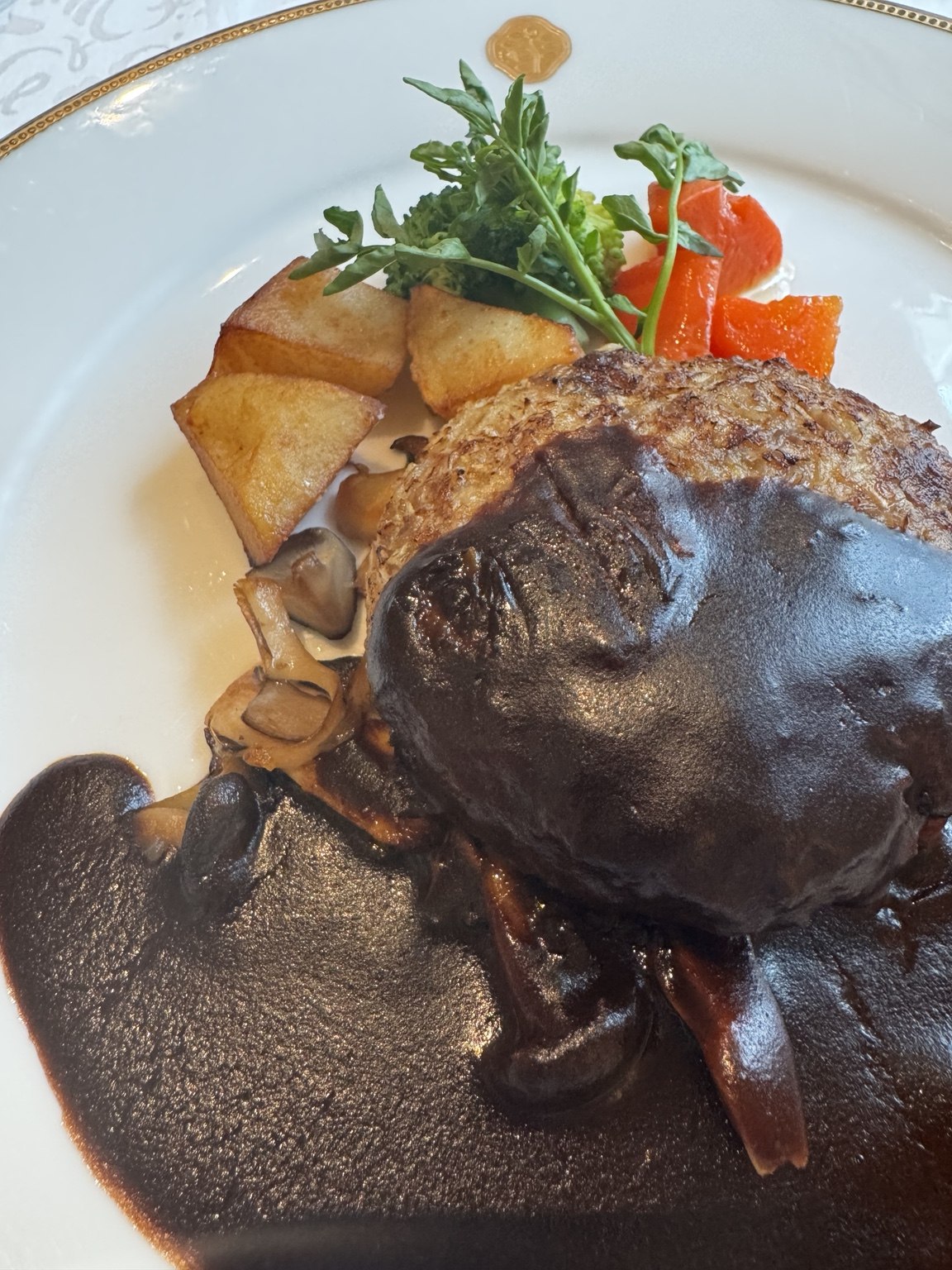
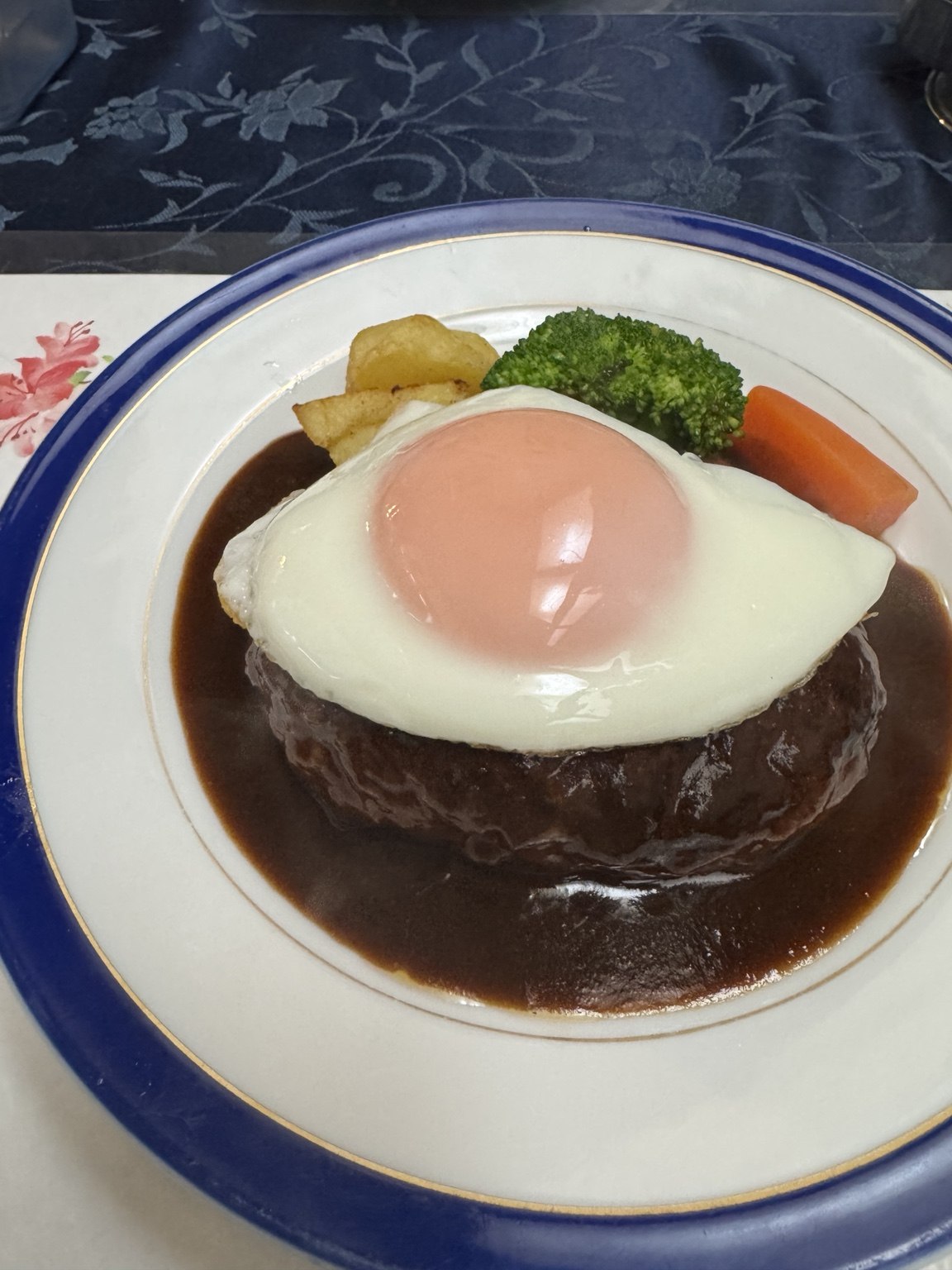
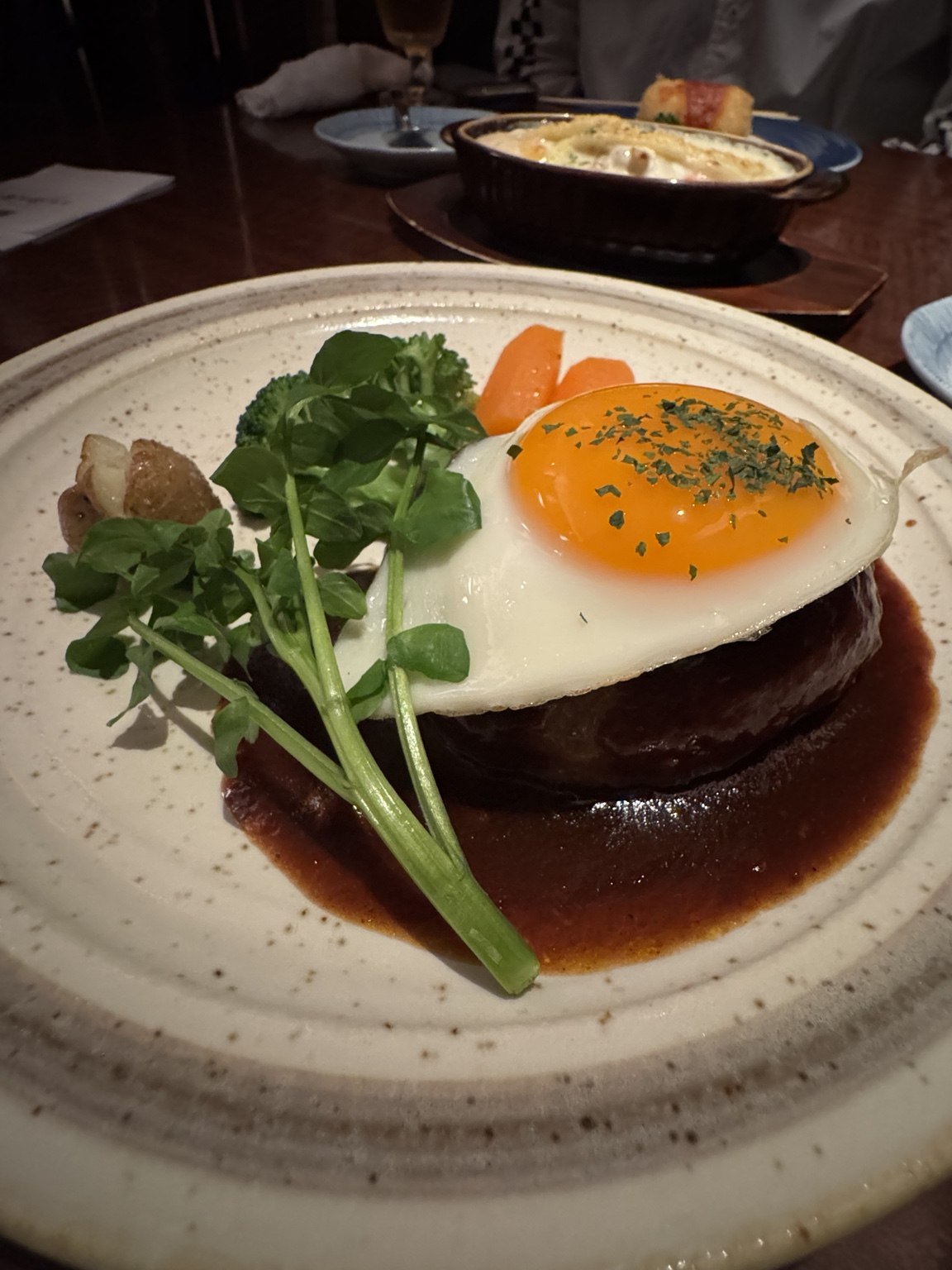
PHOTO NOTES
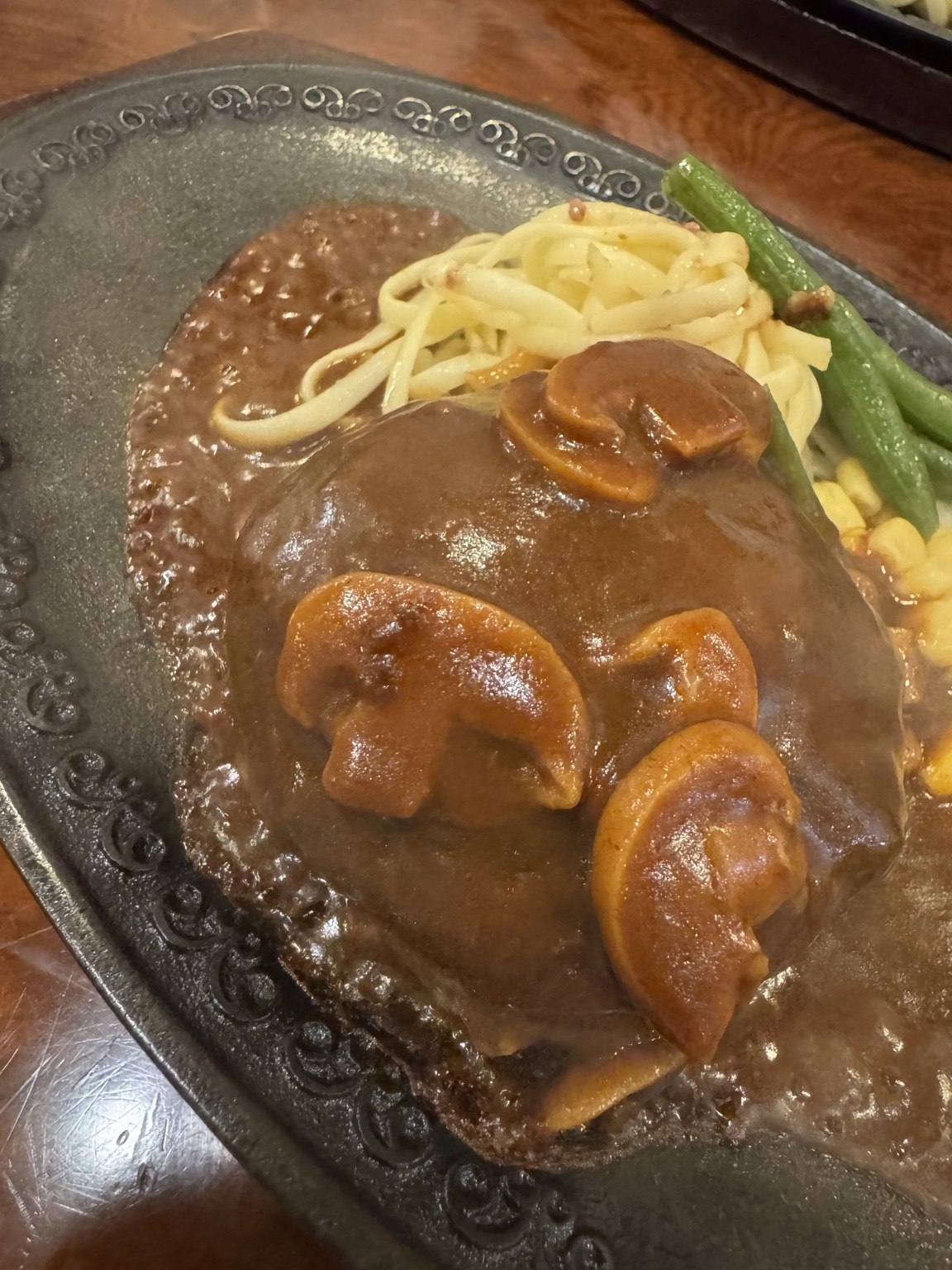
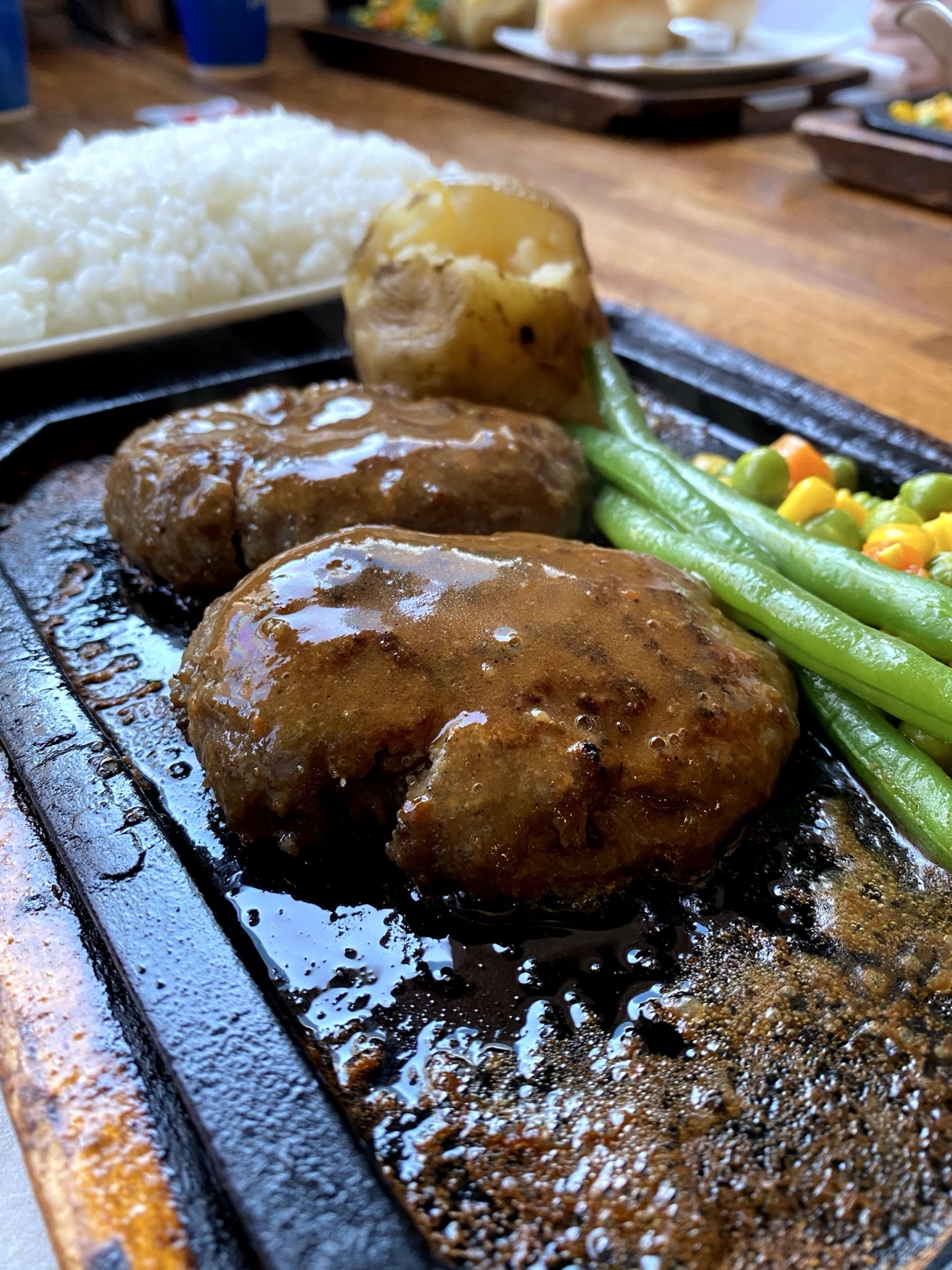
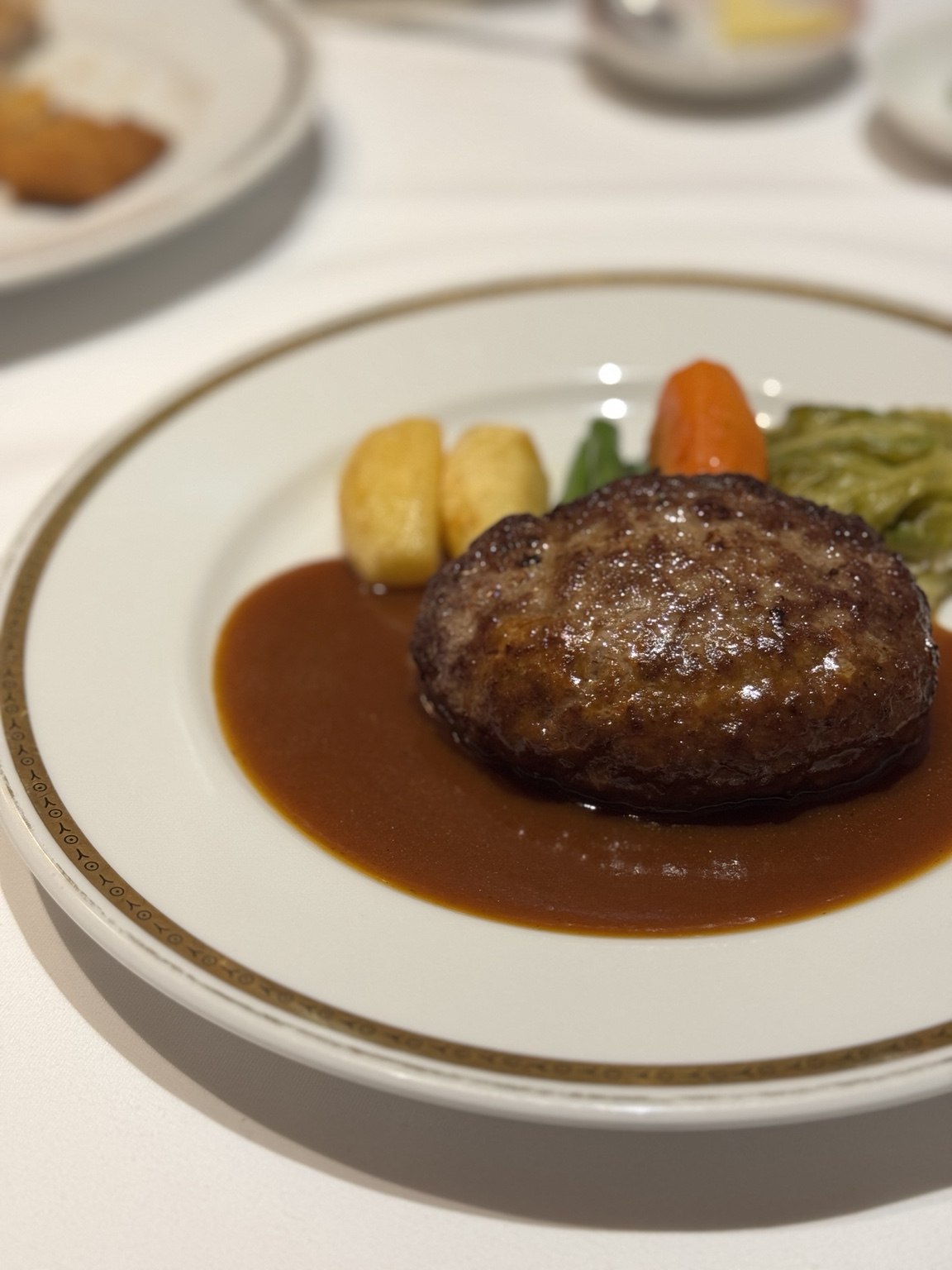
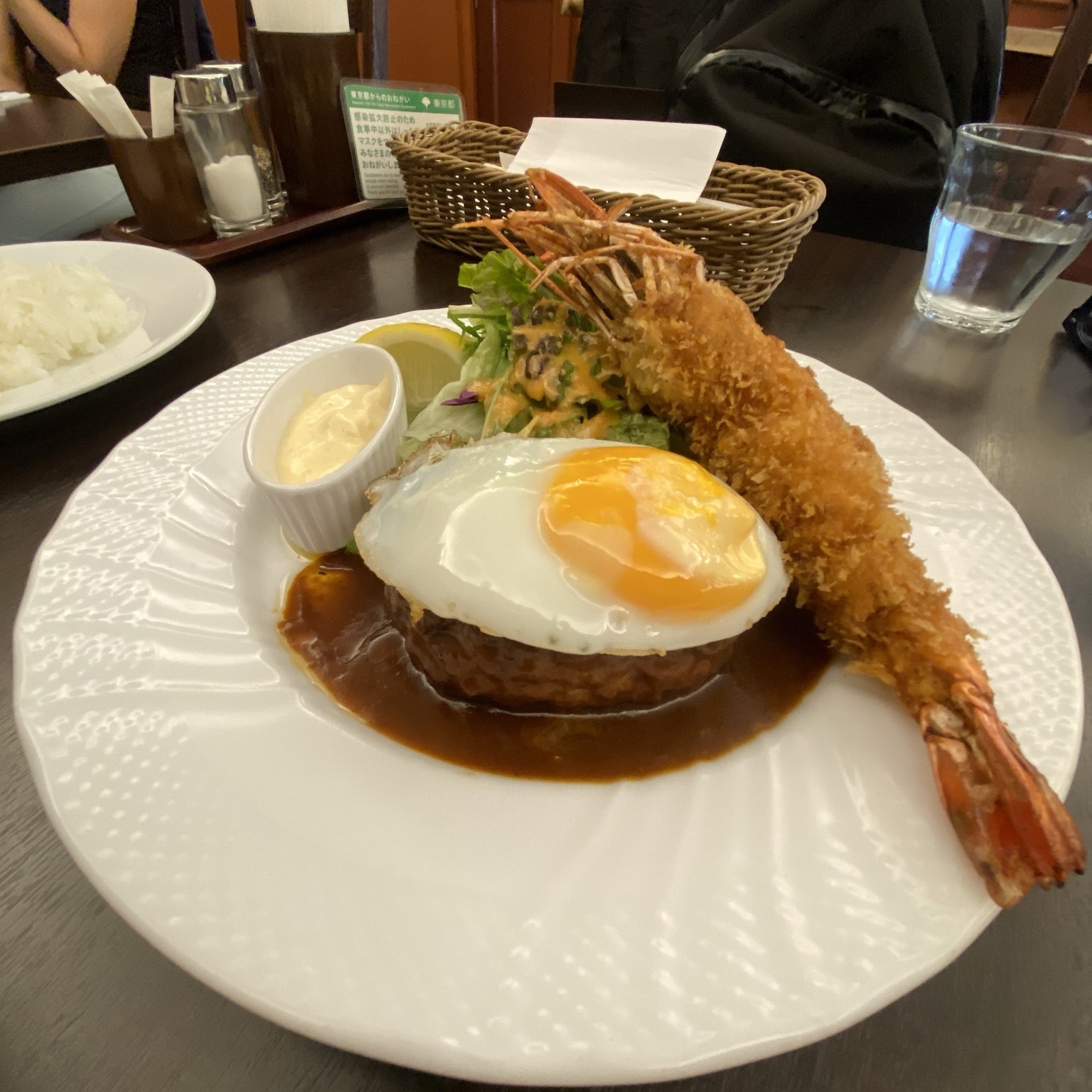
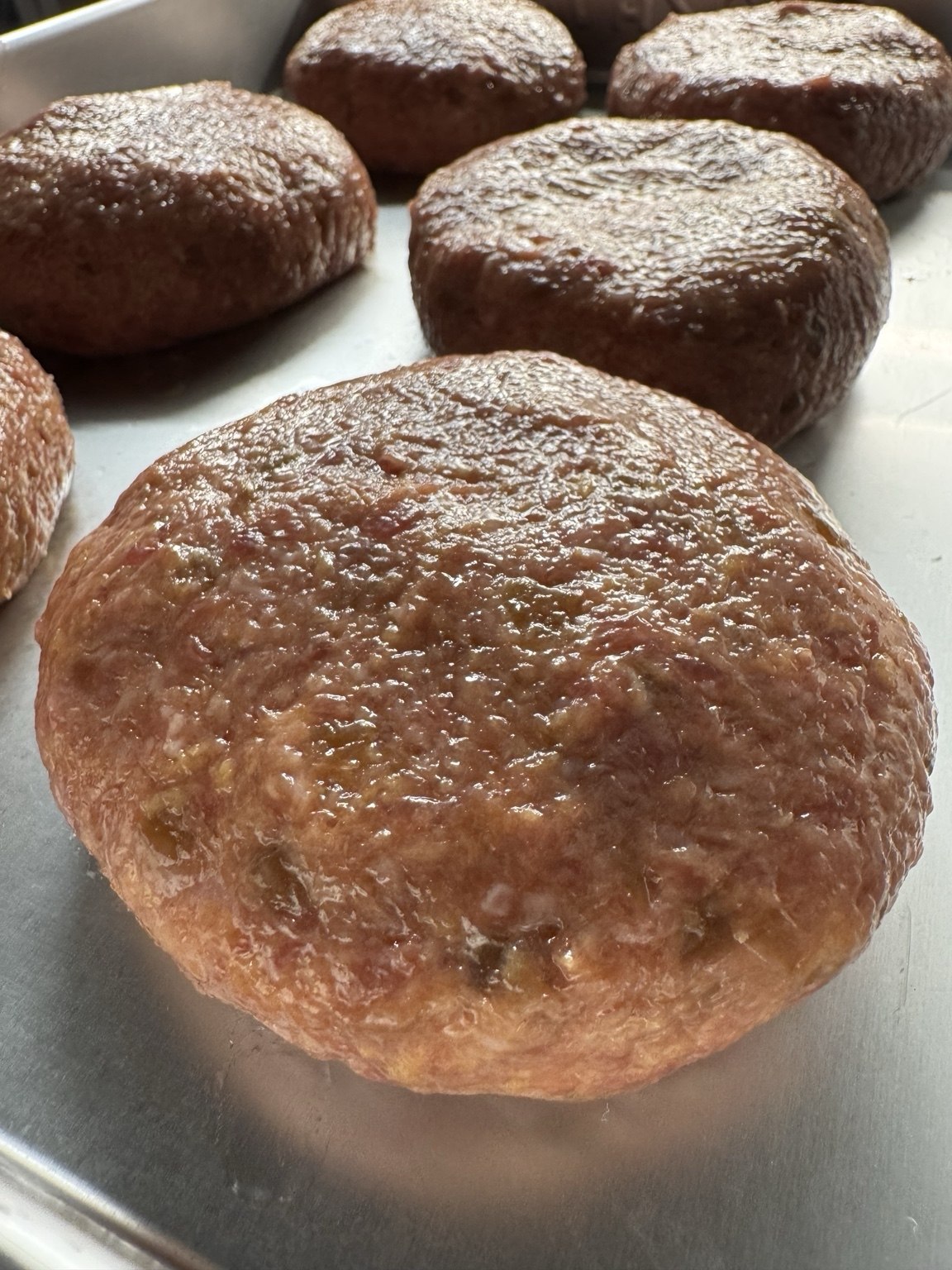
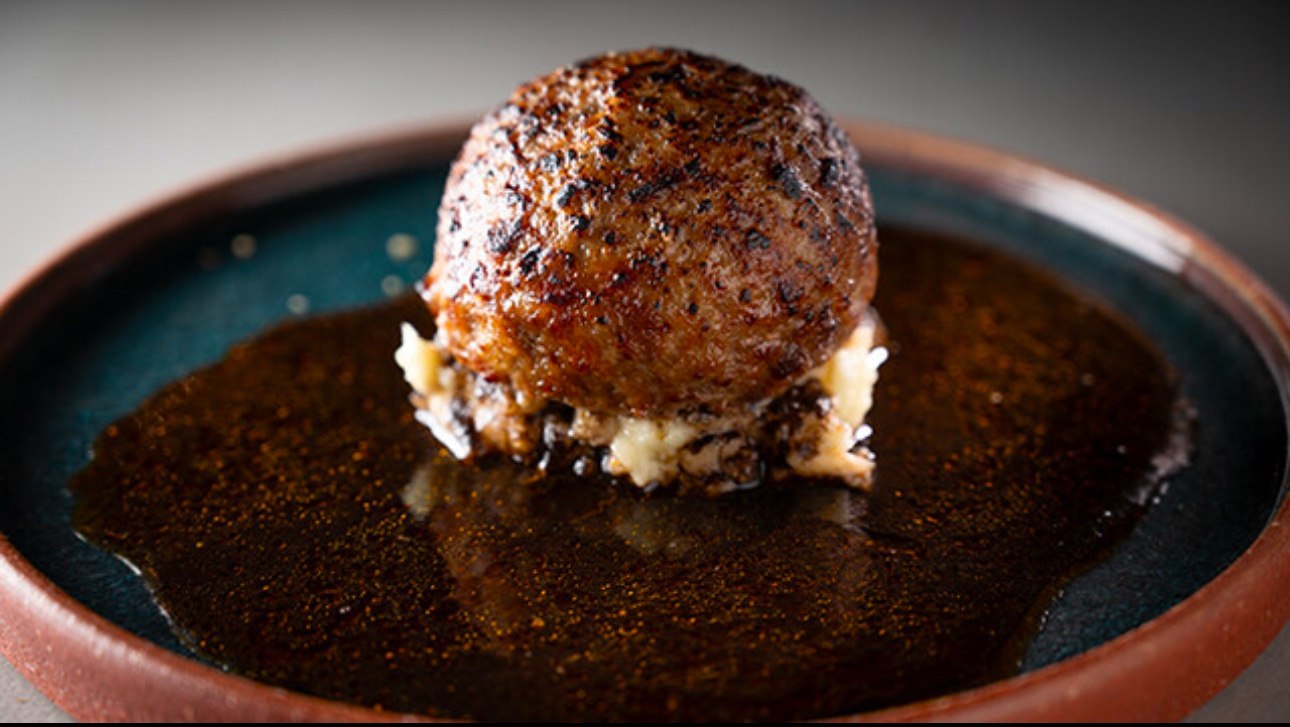
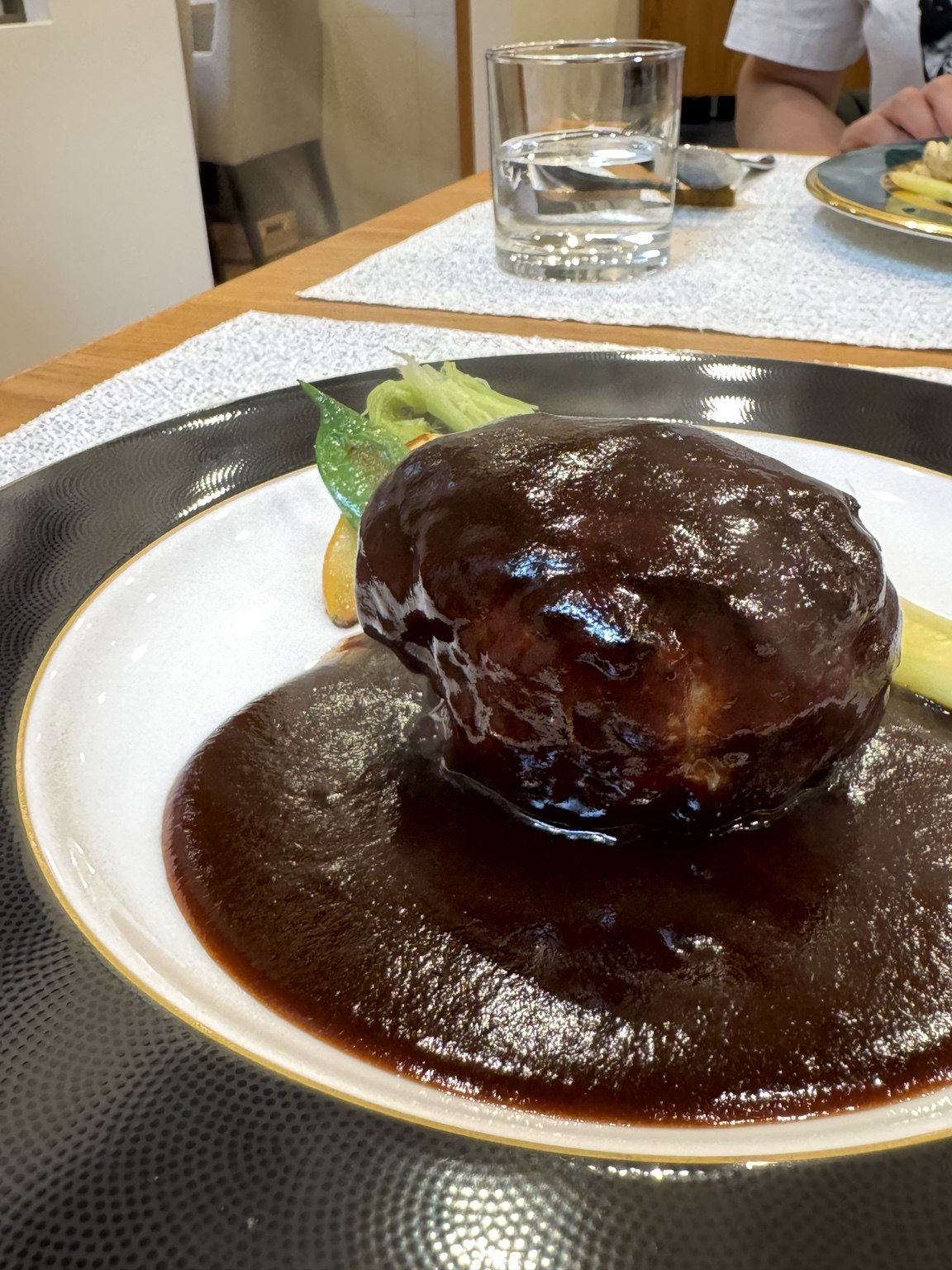
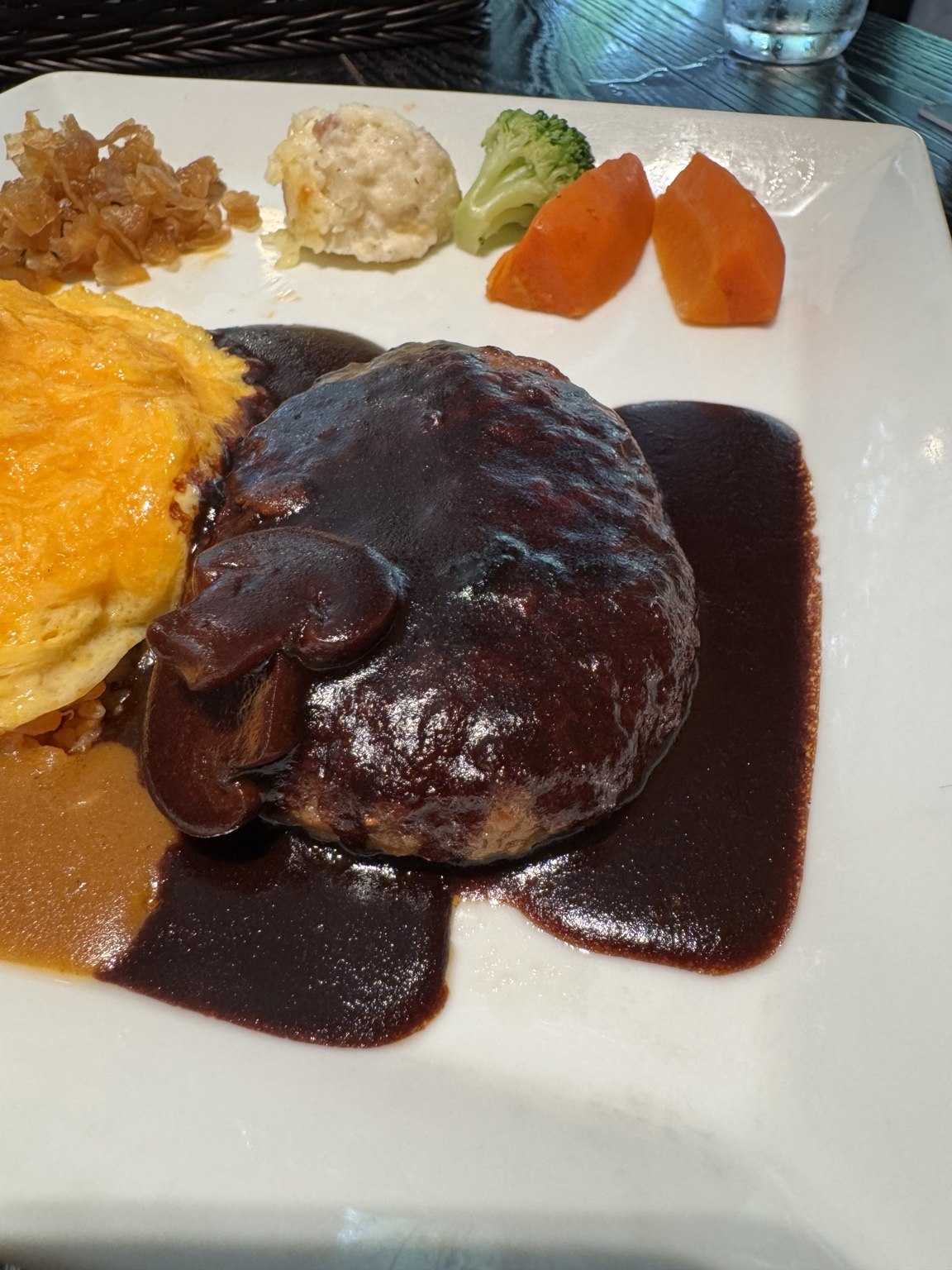
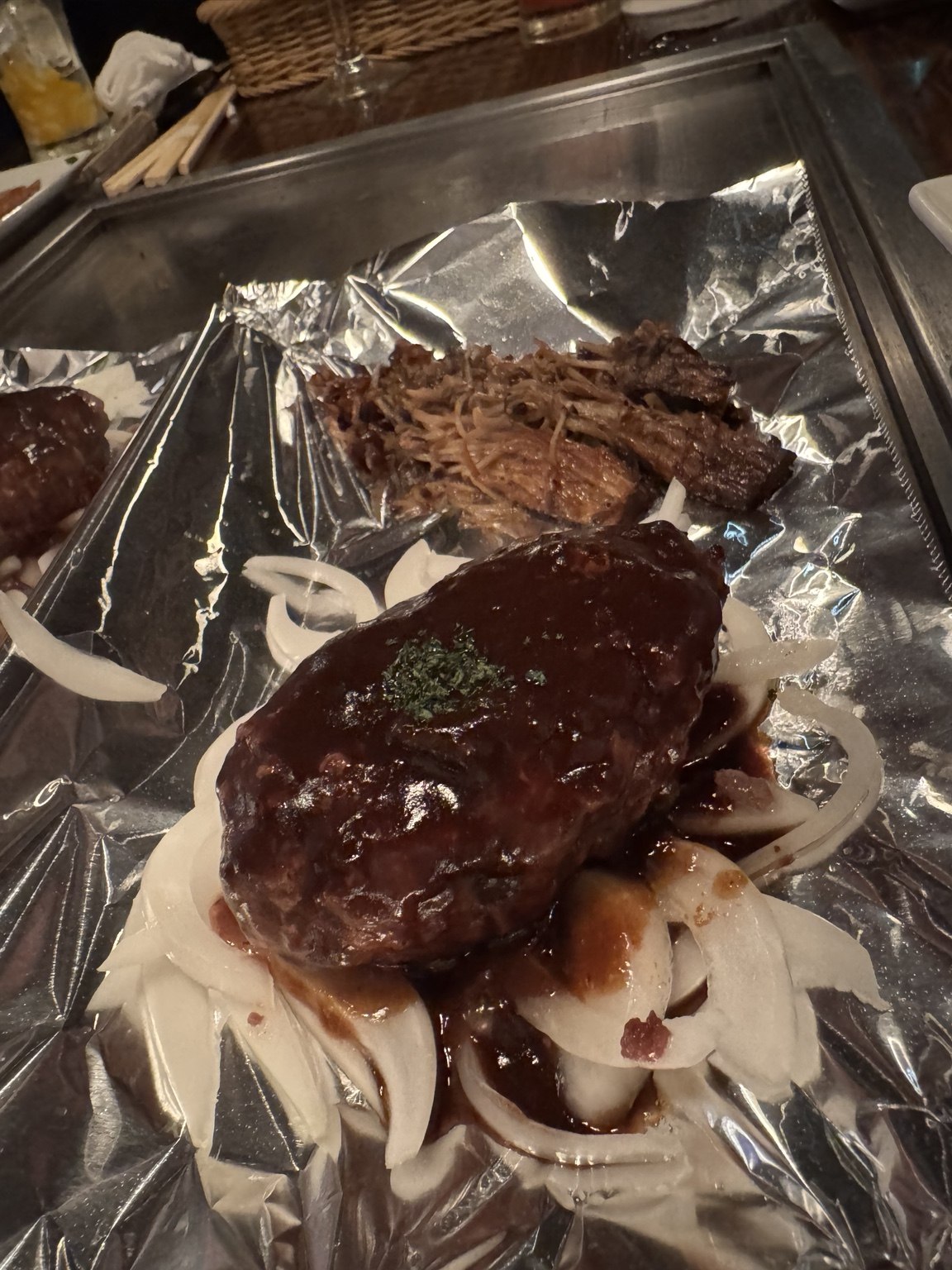
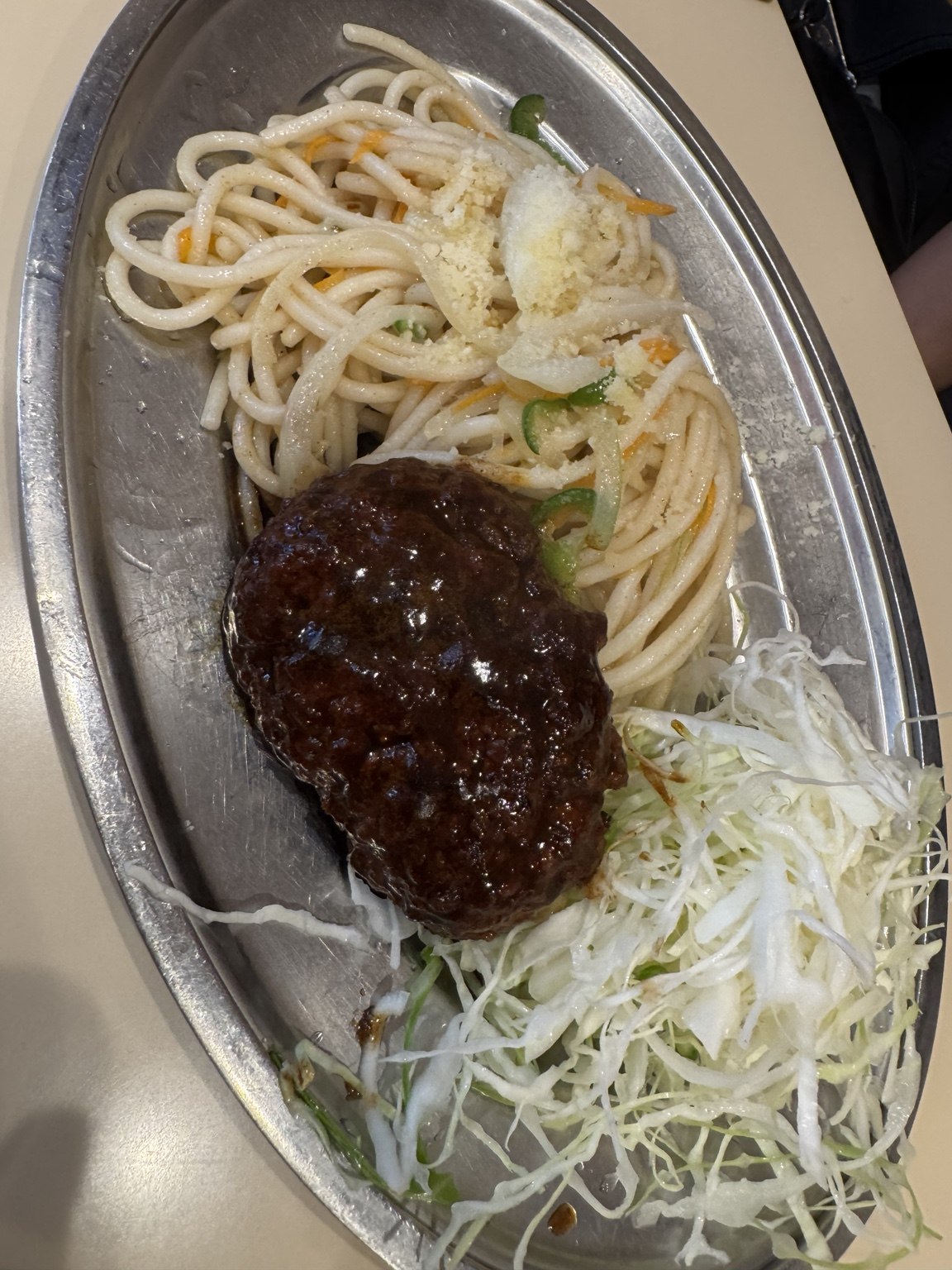
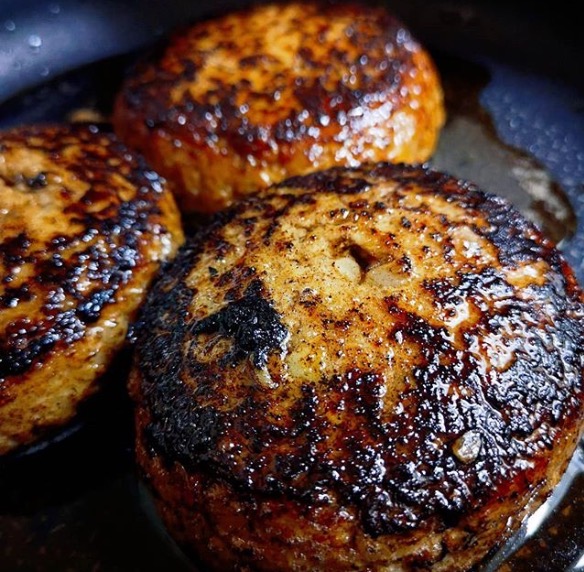
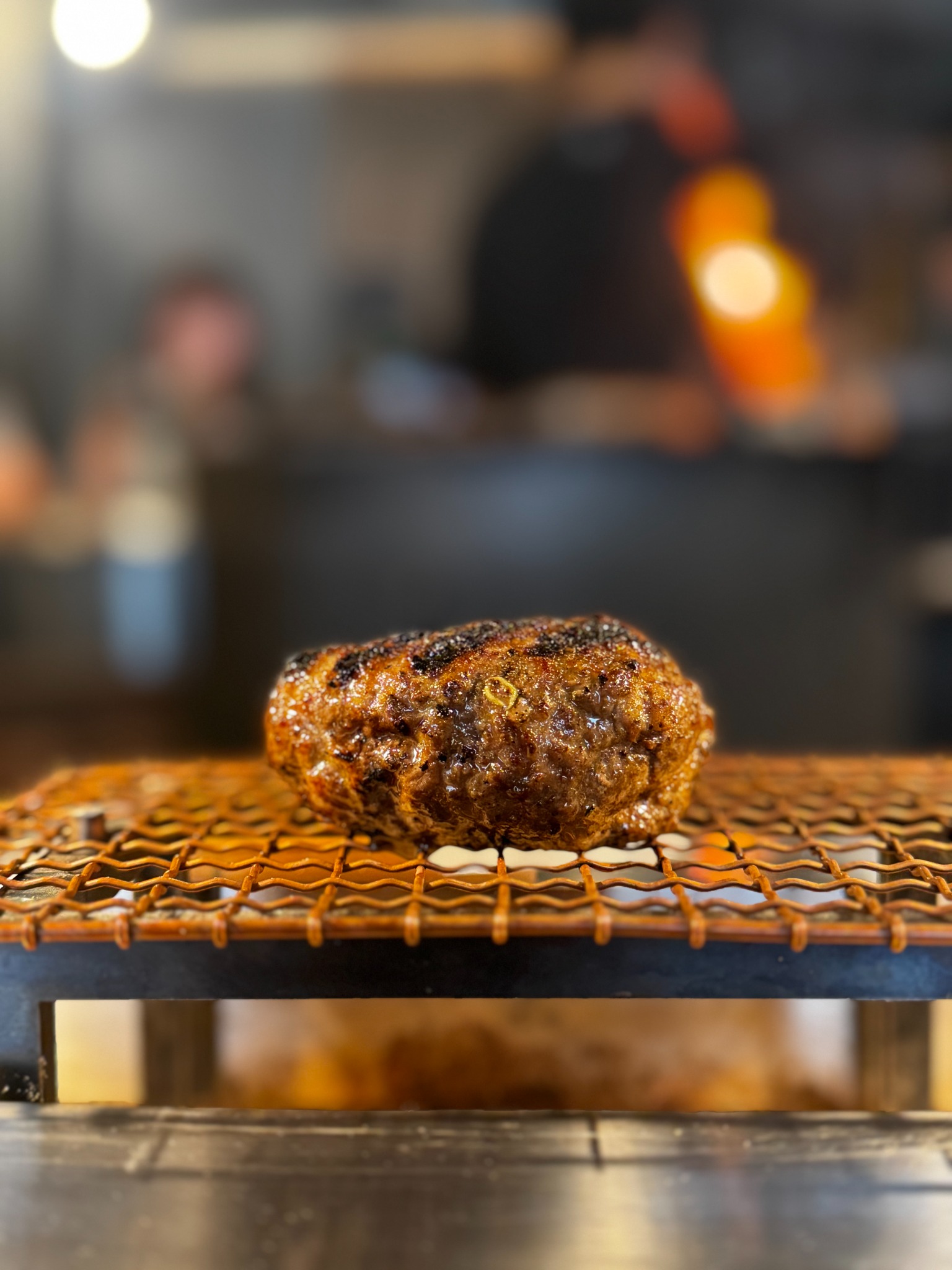
As many designs
as there are plates.
A restaurant name is shown only where the photograph has been confirmed with that restaurant. Unconfirmed photographs are published as general tasting records, unattached to any specific restaurant.
THE COMPLETE SERIES
Tokyo Hamburg Grand Prix 2026
Six stories.
EPISODE 01 / 06
Tokyo Hamburg Grand Prix 2026 begins.
From popular vote to culinary evaluation. How Tokyo's hamburg steak will be read, what voting and judging each contribute, and where the boundaries are drawn.
READ STORY→
EPISODE 02 / 06
Is a Tabelog score under 3.5 really a low rating?
The displayed score versus the simple average of user ratings. Lining up the gap between them changes how public ratings read.
READ STORY→
EPISODE 03 / 06
The candidate ranking, read through public data.
Tabelog simple averages and Google ratings are combined to show where each candidate stands. Not a final ranking — a map for deciding where to eat.
READ STORY→
EPISODE 04 / 06
Revisiting the 2025 Top 10.
The restaurants chosen by web vote, re-examined against 2026 public ratings. Grill Sakura rises; Ginza Yoshizawa moves to reference listing.
READ STORY→
EPISODE 05 / 06
The differences numbers cannot show.
Meat, doneness, sauce, rice. Diners and the anonymous panel of specialists set out the measures they use to judge a plate.
READ STORY→
EPISODE 06 / 06 — THE RESULTS
August 9, Hamburg Day. The results.
Grand Prize, Hamburg Prince Award, Data Discovery Award. The three 2026 awards, decided by layering public data with first-hand tasting.
SEE THE RESULTS→
EDITORIAL FLOW
From question to result.
01Set out the criteria
02Question how scores read
03Rank the candidates by data
04Re-examine last year's Top 10
05Discuss what numbers miss
06Announce the three awards
Scores don't decide it.
But scores are not ignored.
Carrying forward the energy of the public vote, reading the public ratings, layering in first-hand tasting, and looking at hamburg steak as food.
Start from Episode 01 →